Future Proofing Ourselves: An Op-Ed on Generalism in Technology
Subjects such as human augmentation and automation tend to raise eyebrows. Time and time new technologies are unveiled as revolutionary, and time after time they fall by the wayside. The push for integrating AI, robotics and other emerging technologies into our daily lives is frequently met with skepticism, more sci-fi than anything else.
Therein lies the problem — a disconnect between what people may accept as useful and what is currently being developed and touted as cutting edge technology. It’s why so many well-funded tech companies fail, and it’s why many initially promising ideas end up being forgotten. The technology is here, but the implementation is lacking.
Often in conversations I find that people would like to see practical utility out of technological developments, rather than infinite potential. When assessing whether or not a new technology might be useful to society as a whole, I like to ask myself: “Would grandma have a use for it?”
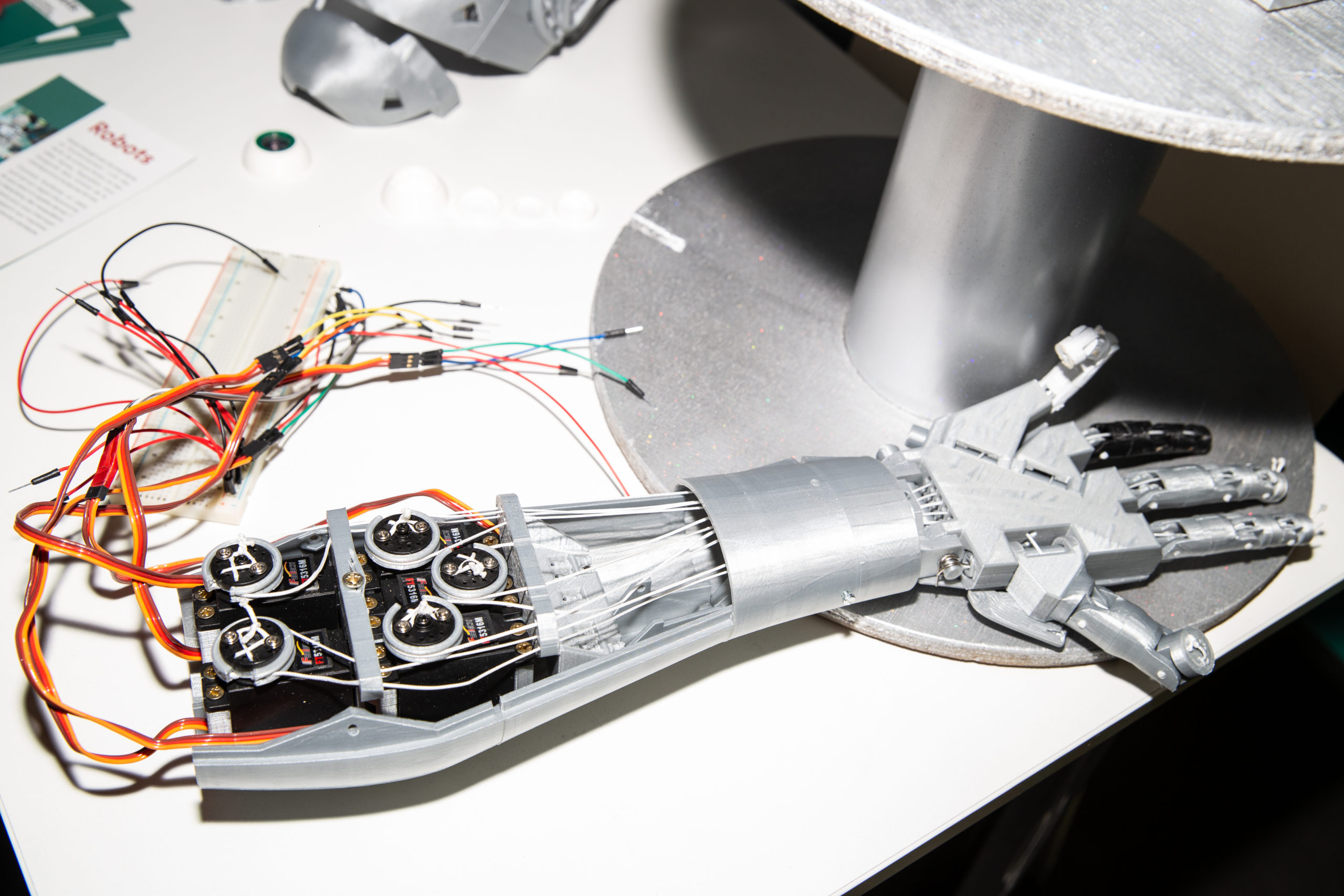
I’ll start with robotic hands, since I believe they have a high potential for general utility and fall criminally short of meeting it. One piece of hardware that comes to mind is the Shadow Hand. Simply put, it’s a robotic hand that can be controlled remotely by a user anywhere in the world. It’s a marvel of technology, but ended up only being a blip on the radar in a vast ocean of technology news.
Let’s do a thought experiment. If something like the Shadow Hand were attached to a small, wheeled robot with remote piloting technology, one could create a proxy for themselves that can manipulate objects remotely in real time. For grandma, this would eliminate her need to go to the grocery store or grab her mail — she would only need to leave the house for leisure, rather than running errands.
Now, while the image of a grocery store being filled with one-armed, remote controlled proxy robots piloted by grandmas at home on their sofas may be hilarious, it does illustrate a key point about generalism in technology: Many of the technologies coming out of Silicon Valley can be combined in ways that make them better than the sum of their parts.
Devices like the computer, the smartphone and the television were revolutionary because they leveraged existing technologies in ways that allowed for almost limitless generalized uses. They let the user paint the picture with the devices serving as a conduit for created content.
Recent developments such as Alexa and Google Home, while widely used, are often seen as unnecessary and even met with major skepticism. These devices both lack general utility and have poor track records on privacy. They perform specialized functions incredibly well, but they tend to come off as a novelty product. It’s hard to make a compelling argument for someone to accept a new piece of hardware as a defacto device when the provided function is nonessential, and the resources for creating new content are only accessible to the technologically inclined.
Simply put, the pros don’t outweigh the cons.
This is why generalization is key. The high tech hegemony is increasingly focused on filling niches to the point where they have inadvertently put blinders on innovation. There are ample resources available to create devices that would be able to do everything from eliminating redundant jobs to greatly augmenting workflows.
However, the onus isn’t completely on companies to innovate. General utility among new devices and technologies is intrinsic to society’s perception of usefulness. Without active and engaged content creators, no platform or technology can hope to thrive.
People tend to be wary of new things, and perhaps rightfully so, but there comes a time when we must take a collective leap of faith. The old adage “If not us, who? If not now, when?” is truer today than ever before. Other countries and governments are already ahead of us, and we can either be proactive or fall by the wayside.